Block paving vs resin bound vs tarmac: comparing driveway costs and durability
By Ethan Fischer · Updated 2026-06-11
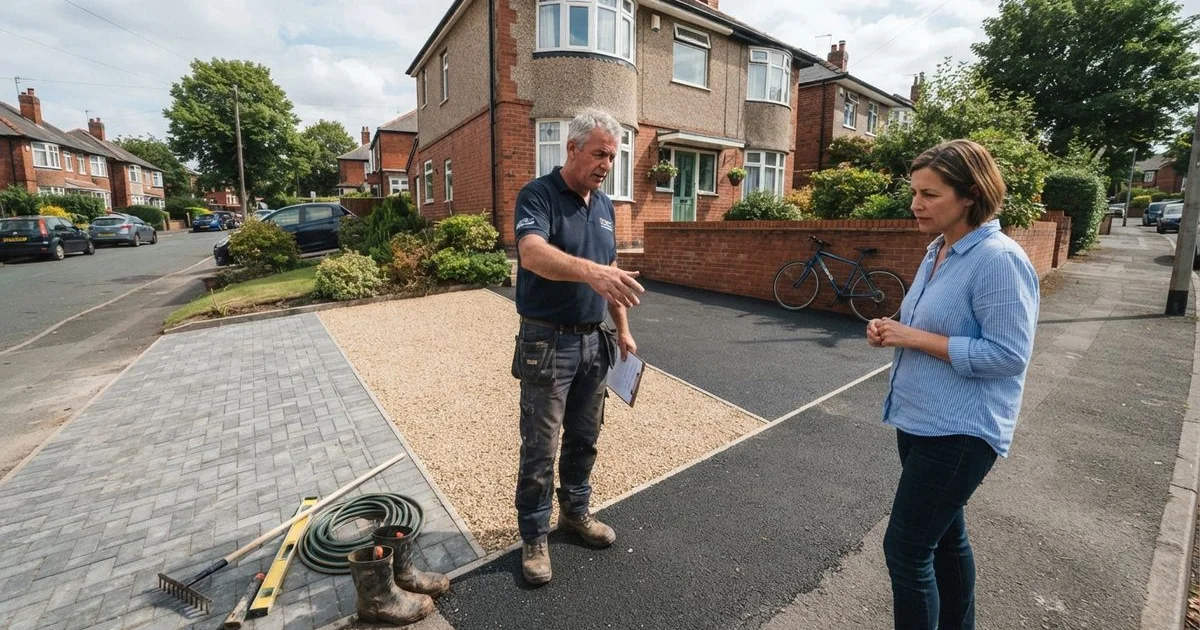
Choosing between block paving, resin bound surfacing and tarmac is usually the first real decision in a driveway project, and it’s easy to let it come down to looks alone. Price, durability and how much upkeep each one needs over the years matter just as much, especially since a driveway is a job most people only do once every couple of decades.
None of the three is objectively “best.” Each suits a different budget, style and level of ongoing attention, and the biggest cost differences often come from ground preparation rather than the surface material itself.
Tarmac: the budget-friendly, low-fuss option
Tarmac is generally the cheapest of the three per square metre, and it’s quick to lay once the sub-base and edging are in. It gives a clean, uniform finish that suits larger driveways or properties where a decorative pattern matters less than a tidy, functional surface. A well-laid tarmac driveway typically lasts 15 to 20 years before it needs resurfacing, longer with occasional sealing and prompt repair of small cracks.
The trade-off is repair visibility. A patch of new tarmac laid into an older surface rarely blends in perfectly, so localised repairs can leave a driveway looking patchworked even when it’s structurally fine.
Block paving: flexible, repairable, and a strong middle ground
Block paving sits in the middle on price and offers something the other two don’t: individual blocks can be lifted and reset if you ever need access to a drain or a cable underneath, then relaid without leaving a visible scar. It also comes in a wide range of colours and laying patterns, which makes it a common choice for period properties around Cheltenham where a uniform tarmac finish can look out of place.
A correctly built block paving driveway, with a proper sub-base and haunched edge restraints, can last 20 to 25 years or more. Jointing sand needs occasional topping up, and a small number of blocks may need re-levelling over time, but this is minor maintenance rather than a sign of failure.
Resin bound surfacing: the premium, low-maintenance choice
Resin bound surfacing costs the most to install, generally running higher per square metre than either tarmac or block paving because of the material cost and the skill needed to lay it evenly. In return, it gives a smooth, joint-free finish with a naturally permeable surface, which can help meet planning requirements around surface water drainage for front gardens. It needs very little upkeep once laid, mainly keeping it clear of moss and debris.
The main risk with resin is installation quality rather than the material itself. A resin surface laid over a poorly prepared or under-depth base will fail just as fast as any other surface, since the resin layer itself isn’t what’s providing structural strength.
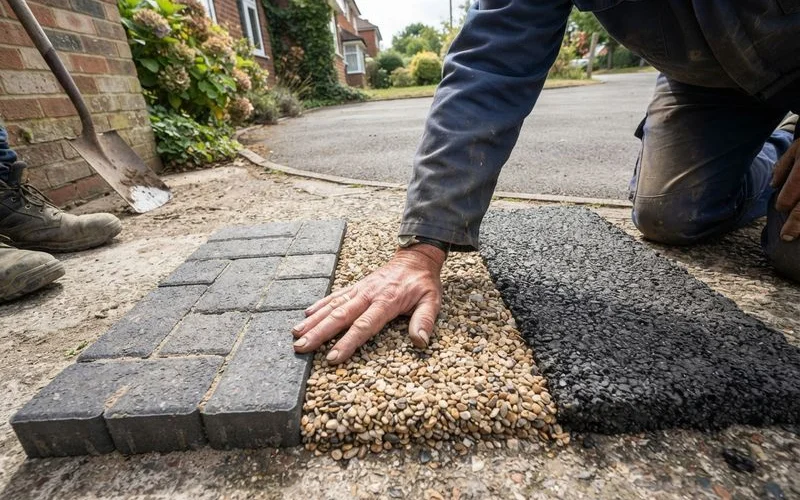
Side-by-side comparison
| Tarmac | Block paving | Resin bound | |
|---|---|---|---|
| Typical cost | Lowest | Mid-range | Highest |
| Typical lifespan | 15-20 years | 20-25 years or more | 15-20+ years with good install |
| Repairability | Patches can be visible | Blocks can be lifted and reset | Harder to patch invisibly |
| Drainage | Not permeable unless a porous mix is used | Can be laid permeably with the right jointing | Naturally permeable when laid correctly |
| Maintenance | Occasional sealing, crack repair | Re-sand joints, re-level occasionally | Minimal; keep clear of debris |
Weighing the decision
If keeping upfront cost down matters most and you’re covering a larger area, tarmac is usually the practical choice. If you want a surface that can be adapted or partially lifted later, and a finish that suits an older property, block paving offers a good balance of price and flexibility. If a smooth, low-maintenance finish and permeable drainage matter more than upfront cost, resin bound surfacing is worth the premium, provided the contractor you choose can show a solid track record on preparation, not just finished photos.
Whichever material you lean toward, the same rule applies across all three: the sub-base is what determines whether the driveway lasts two decades or two years, so weigh a contractor’s groundwork experience at least as heavily as which surface they specialise in. Our methodology looks at exactly this kind of workmanship evidence when scoring local contractors.
You can browse Cheltenham paving specialists by material through the Know Cheltenham directory to compare contractors working in each of these surface types.
FAQ
- Which surface is cheapest to install?
- Tarmac is usually the lowest cost per square metre for a straightforward driveway, followed by block paving, with resin bound surfacing generally the most expensive of the three because of the material and the skilled labour it requires.
- Which lasts the longest with the least upkeep?
- All three can last 15 to 25 years or more when the sub-base is done properly. Tarmac needs the least routine attention day to day, block paving occasionally needs joints re-sanded, and resin needs almost no maintenance beyond keeping it clear of debris, though a poor install undermines any of them equally fast.
- Can I mix materials, like resin for a patio and block paving for the driveway?
- Yes, this is common. Many contractors happily quote for a mixed job, and it lets you put a higher-cost material where it's seen most, such as a resin path or patio, while keeping a larger driveway area in a cheaper surface.
- Does resin bound surfacing really drain better than the others?
- Properly laid resin is permeable, so rain passes through it rather than running off, which can help meet planning rules for front gardens. Block paving can also be laid permeably with the right jointing. Tarmac is generally not permeable unless a specific porous mix is used.