Accessible driveways and patios: level access for mobility needs
By Ethan Fischer · Updated 2026-06-04
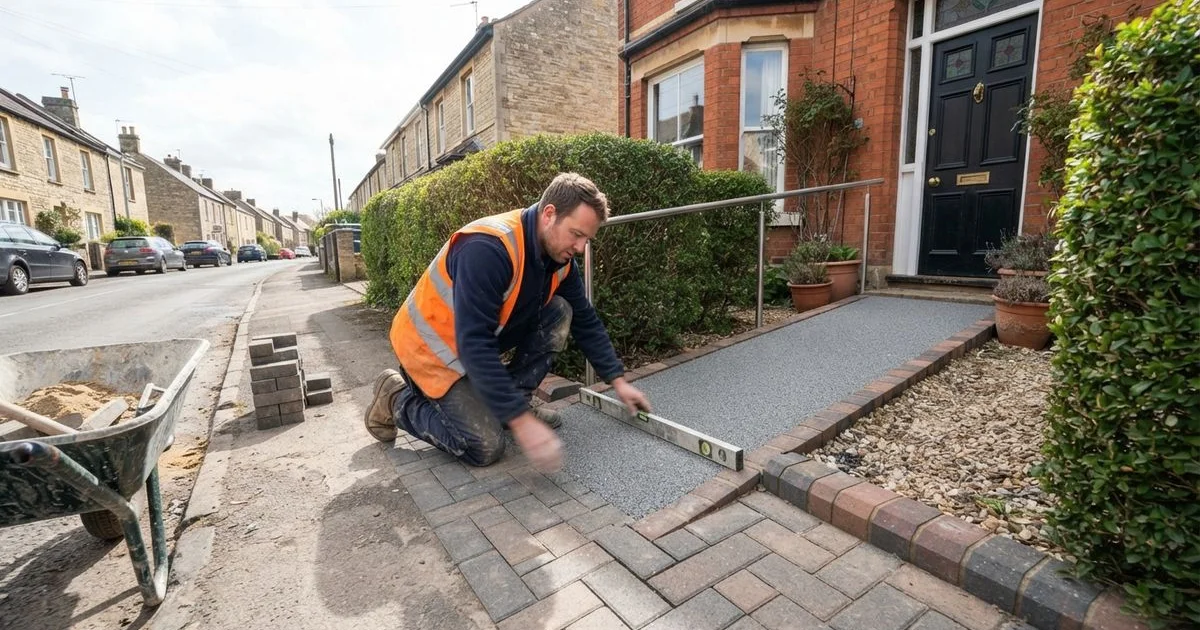
A driveway or patio that looks fine for everyday use can become a genuine daily obstacle for anyone using a wheelchair, mobility scooter, walking frame or cane. Getting the surface, gradient and level thresholds right at the planning stage makes a real difference to how usable a home is, whether that’s for a current need or planning ahead.
Surface choice matters as much as looks
A firm, even surface with minimal joint gaps is the priority. Well-laid tarmac and resin bound surfacing both offer a smooth, continuous finish that’s easy to move across on wheels. Block paving works well too, provided the joints are tight and the blocks are laid flush without lips or unevenness between them, since a small ridge that’s barely noticeable on foot can be a real obstacle for a wheelchair caster or scooter wheel.
Loose materials like gravel are generally the hardest surface for mobility aids to manage, since wheels sink in and caster wheels in particular can get caught. If gravel is preferred for its appearance, a stabilised or resin-bound gravel option, which locks the stones in place while keeping a similar look, is a more practical choice for accessibility.
Gradient is the detail people underestimate
A slope that feels barely noticeable on foot can be genuinely difficult to manage in a wheelchair, particularly self-propelled, or with a scooter on the way back up. For a dedicated access ramp, a gradient of around 1:12 is generally treated as a reasonable maximum for domestic use, meaning one unit of rise for every twelve units of length, though a shallower gradient is easier and safer wherever the site allows it. Where the natural slope of a driveway is steeper than this, a longer, more gradual route, even if it means the path isn’t the shortest line from the road, is usually more usable than a short, steep one.
Level thresholds and transition points
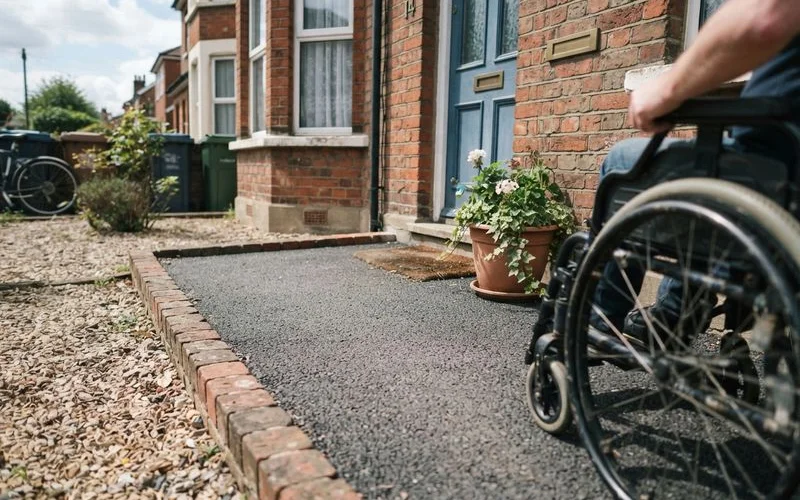
Where a driveway meets a path, a patio meets a doorway, or one surface changes to another, a small lip or step can be a significant barrier even at a height that looks negligible. Planning these transitions as flush, level changes rather than small steps makes the whole route usable rather than technically accessible but practically awkward at every junction.
This is worth discussing with a contractor at the design stage, since it often affects how drainage falls need to be planned too, an accessible route generally can’t rely on a steep camber to shed water the way a standard driveway might.
Parking space and turning room
Beyond the route to the front door, think about the space needed to actually get in and out of a vehicle safely. A wheelchair user transferring from a car needs meaningfully more clear space alongside the vehicle than a standard parking bay allows, and a driveway that’s just wide enough for the car itself often isn’t wide enough to be genuinely usable. If you use a scooter that needs to be loaded or unloaded from a vehicle, factor in the manoeuvring space for that too, not just parking width.
This is easy to overlook at the planning stage, since a driveway can look perfectly generous on a drawing but feel tight the first time it’s actually used the way it’s meant to be. Walking or wheeling through the intended sequence, arriving, parking, transferring, moving to the door, before finalising a design catches problems a plan on paper won’t show.
A practical checklist
| Consideration | What to aim for |
|---|---|
| Surface material | Firm, smooth, well-jointed; avoid loose gravel or wide, uneven joints |
| Gradient | As shallow as the site allows; around 1:12 maximum for a dedicated ramp |
| Route length versus steepness | A longer, gentler route is usually more usable than a short, steep one |
| Transitions between surfaces | Flush and level, not stepped, wherever possible |
| Drainage | Planned around a gentler camber suited to an accessible route |
| Lighting | Good, even lighting along the route helps at dusk and in winter |
Planning the work
Discuss your specific needs, whether that’s a wheelchair, a scooter, or a walking frame, directly with your contractor at the quoting stage, since the right groundwork and gradient decisions need to be made before excavation starts, not adjusted afterwards. For the general questions worth asking any contractor before signing off on a quote, see our guide on questions to ask a paving contractor before you hire them. It’s also worth checking with your local council whether a Disabled Facilities Grant might apply to part of the cost, since eligibility and coverage vary and it’s a resource many homeowners aren’t aware of.
Browse local paving contractors with relevant experience through Know Cheltenham, and see how we assess workmanship and communication on our methodology page.
FAQ
- What's the maximum gradient for a wheelchair-accessible driveway path?
- As a general guide, a gentle, consistent gradient is far more usable than a short, steep one. Building regulations for a private dwelling generally recommend a maximum gradient of around 1:12 for a ramp, though a shallower gradient, where the site allows, is easier and safer to use.
- Which paving material is best for wheelchair or mobility scooter use?
- A firm, smooth but not slippery surface works best. Well-laid tarmac, resin bound surfacing, and tightly jointed block paving all perform well. Loose gravel and surfaces with wide, uneven joints are harder to manage for wheels and can catch a caster wheel or cane.
- Can an existing driveway be adapted for accessibility, or does it need replacing?
- It depends on the current gradient and surface. A driveway with a reasonable slope but a rough or uneven surface can sometimes be resurfaced rather than rebuilt. A driveway with a genuinely steep incline usually needs more significant groundwork to correct.
- Is there any financial help available for accessibility adaptations to a driveway?
- Some homeowners may be eligible for a Disabled Facilities Grant through their local council, which can cover certain accessibility adaptations including access routes. Eligibility and what's covered varies, so check directly with the council for current criteria.