Questions to ask a paving contractor before you hire them
By Ethan Fischer · Updated 2026-07-13
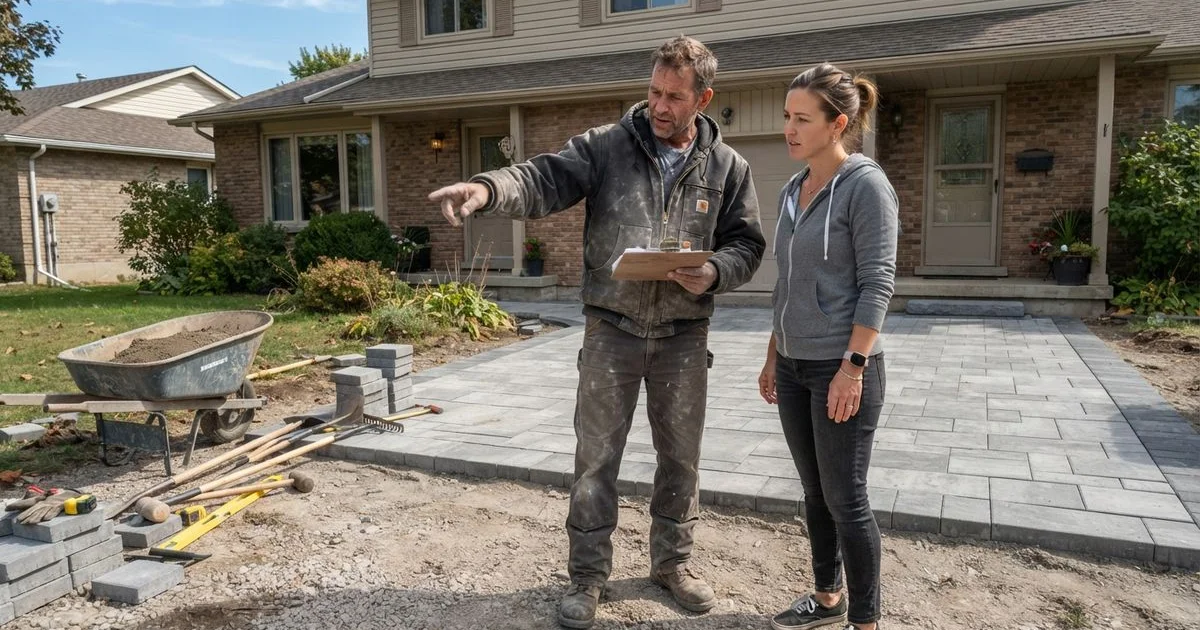
Paving work is one of those jobs where a bad decision doesn’t show up on day one. The surface can look fine for months before drainage problems, sinking patches or cracked edges reveal that the ground underneath wasn’t prepared properly. Since you can’t inspect a sub-base after it’s covered over, the questions you ask before work starts are doing a lot of the quality control for you.
Reviews of paving contractors in this area show a consistent pattern: when jobs go wrong, it’s rarely the surface material at fault. It’s shortcuts on preparation, drainage that wasn’t thought through, or a contractor who goes quiet once a problem is raised. None of that shows up in a glossy photo of finished work, which is exactly why asking the right questions upfront matters more than browsing a portfolio.
Start with the groundwork, not the surface
Almost every serious paving failure traces back to what happens before the first block, slab or tarmac layer goes down. Ask specifically what depth of sub-base they’ll use, what material it’s made from, and whether it gets compacted in stages or all at once. A contractor who answers this clearly and without hesitation has almost certainly done it properly before. One who steers the conversation straight to colour options or finish is worth pressing further.
Drainage deserves the same treatment. Ask where the water will go once it hits the new surface, and whether that means tying into an existing drain, adding a soakaway, or laying the whole area to a fall. Standing water after rain is one of the most common complaints homeowners raise months after a job, and it’s almost always a design or preparation issue rather than something a repair can fix cheaply.
Get everything in writing before work starts
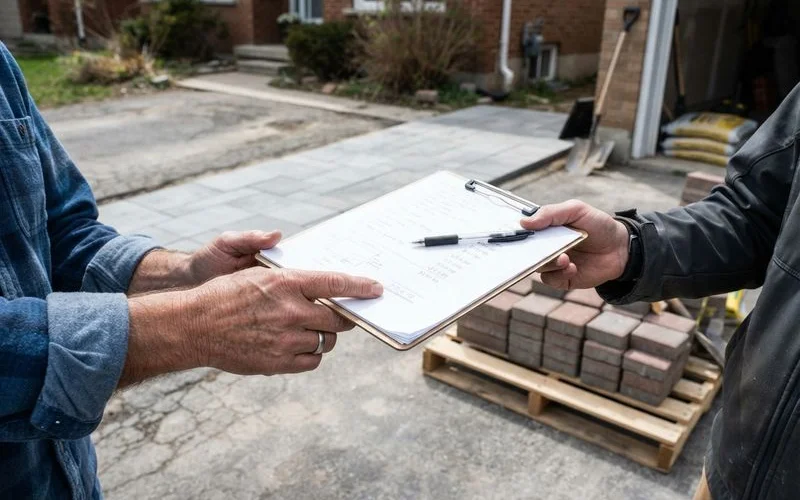
A written quote should separate labour, materials and any groundworks or drainage costs, so you can see exactly what you’re paying for and compare it against other quotes on equal terms. It should also state a start date and a realistic finish window. Contractors who give clear quotes with set timings, matched by a track record of daily site cleanup, tend to be the same ones customers describe as easy to deal with from start to finish.
Ask what happens if the job overruns due to weather, since paving work is genuinely weather-dependent and a contractor who explains delays upfront rather than after they happen is showing you how they’ll communicate for the rest of the project.
Ask about aftercare before you need it
This is the question that separates the reliable contractors from the risky ones, and it’s the one people forget to ask because everything feels fine at the quoting stage. Ask directly: if a section sinks, a joint opens up or drainage doesn’t work as expected six months from now, what’s the process for getting it fixed? Get a straight answer, ideally in writing, about what’s covered and for how long.
The recurring complaint across paving work locally isn’t that jobs go wrong occasionally, since that happens with any trade. It’s that some contractors become unreachable once a defect is reported, leaving the homeowner to chase repeatedly or pay someone else to fix it. A contractor confident in their own work will usually offer a workmanship guarantee separate from any material warranty, and will say so without being asked twice.
A quick reference for the conversation
| What to ask | Why it matters |
|---|---|
| What depth and type of sub-base will you use? | The single biggest factor in whether paving lasts 20 years or fails in two |
| Where does the water go? | Poor drainage design causes most of the pooling and sinking complaints |
| Can I see a written, itemised quote? | Makes comparing contractors and holding them to the job possible |
| What’s your workmanship guarantee? | Shows whether they stand behind the job after the invoice is paid |
| Can I see driveways you laid two or more years ago? | Fresh work always looks good; older jobs show whether the base held up |
| Are you insured and do you handle permits if needed? | Covers you if something goes wrong on site or council sign-off is required |
Trust the answers, not just the price
It’s tempting to let the quote total do the deciding, especially on a job that can run into several thousand pounds. But the contractors who consistently earn strong, sustained praise are the ones who explain their process clearly, put it in writing, and don’t flinch when asked what happens if something needs fixing later. Our methodology for scoring contractors weighs exactly this kind of pattern, sentiment built from what customers say happened after the invoice, not just the star rating on the day the job finished.
If accessibility matters, for a wheelchair user, mobility scooter, or walking frame, raise it directly at the quoting stage: our guide to accessible driveways and patios covers the specific gradient and surface questions worth asking first.
If you’re ready to start gathering quotes, Know Cheltenham lists local paving contractors scored on that same basis, so you can shortlist a few before you start asking these questions in person.
FAQ
- Should I worry if a contractor won't put the quote in writing?
- Yes. A written quote that breaks down materials, sub-base depth, drainage work and labour separately is a basic professional standard. Verbal-only pricing makes it hard to compare contractors fairly and gives you nothing to point back to if the finished job doesn't match what was agreed.
- Is the cheapest quote usually a red flag?
- Not automatically, but a quote that's far below the others is worth asking about directly. Ask what depth of sub-base is included and whether the old surface is being properly excavated or just skimmed over, since those are the two things most likely to be cut to hit a lower price.
- How many quotes should I get before deciding?
- Three is a reasonable minimum for anything beyond a small repair. It gives you enough of a spread to spot an outlier quote and to compare like-for-like on sub-base depth, drainage and timeline rather than just the bottom-line figure.
- What's the single most important question to ask?
- What happens if something goes wrong after the job is finished. The answer, and how confidently it's given, tells you more about a contractor than almost anything else on this list.