Slip and trip hazards: choosing safer paving surfaces
By Ethan Fischer · Updated 2026-07-16
This is general information about safety considerations for outdoor paving, not professional safety advice. If you have specific concerns, particularly around accessibility or a known fall risk in your household, consult a qualified professional.
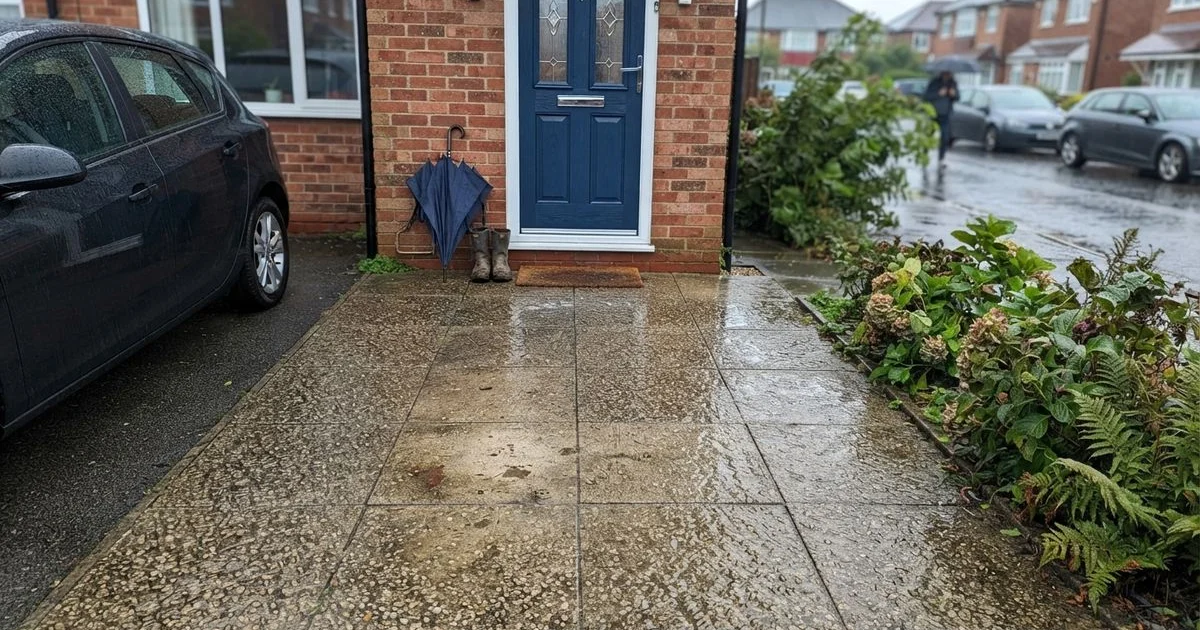
A driveway or patio that looks good in dry, sunny conditions can behave very differently once it’s wet, icy, or covered in a layer of algae after a shaded winter. Slip and trip risk is worth thinking about at the point of choosing a surface, not just after someone has a fall.
What makes a surface slippery
Smooth, highly polished surfaces, some porcelain paving and certain natural stone finishes among them, look striking but can become genuinely slippery once wet, especially in shaded areas that don’t dry out quickly. Algae and moss, which thrive in exactly those damp, shaded conditions, make the problem worse over time by adding a slick film to whatever surface is underneath.
Textured surfaces generally perform better. Riven natural stone, textured concrete slabs, and block paving with a slight surface texture all offer more grip underfoot than a glass-smooth finish. Resin bound surfacing also tends to perform reasonably well, since the aggregate mix naturally creates texture, though this varies by product, so it’s worth asking what slip rating the specific mix has been tested to.
Where trip hazards come from
Slip risk is about the surface itself; trip risk is usually about unevenness. A slab or block that’s sunk or lifted relative to its neighbours, often from ground settling unevenly or a tree root pushing up from underneath, creates exactly the kind of small step change that’s easy to catch a foot on, particularly in low light or when carrying something. This is one of the reasons a properly compacted sub-base matters for safety, not just for how long the surface lasts.
Existing paving that’s developed these small level differences is worth having assessed rather than left, since the fix is often more straightforward when it’s just a few affected areas rather than a widespread problem. If you’re mid-project rather than living with a finished surface, our guide on site safety during driveway and patio work covers the trip hazards an active site brings, like an open trench or stacked materials.
Reducing risk on an existing surface
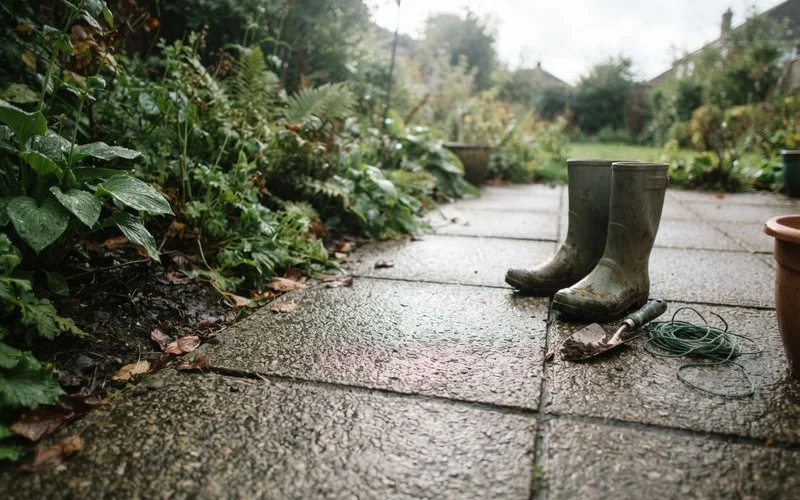
Regular cleaning matters more than most people expect, particularly removing algae and moss buildup from shaded or north-facing areas where they thrive. A pressure wash, done carefully so as not to damage jointing, can restore a meaningful amount of grip to a surface that’s become slippery over time. For certain materials, an anti-slip treatment can be applied as an additional step, though it’s worth checking this is suitable for your specific surface before applying it.
Timing helps too. Autumn leaves left to rot on a patio create a slick film that’s easy to underestimate, and a surface that’s fine in summer can turn genuinely hazardous once wet leaves and falling temperatures arrive together. A regular sweep through autumn and winter, rather than waiting until spring to clear months of buildup, keeps a surface safer through the months it’s most at risk.
For genuinely uneven areas, ask a contractor whether individual slabs or blocks can be lifted and relevelled rather than requiring a full replacement, since this is often a smaller, more affordable job that directly addresses the trip risk.
Choosing a safer surface if you’re planning new paving
| Consideration | What to look for |
|---|---|
| Slip resistance when wet | Textured or riven finishes over highly polished ones |
| Shaded or damp areas | Surfaces that dry faster and resist algae buildup |
| Steps or level changes | Clear visual contrast and, ideally, textured nosing |
| Existing uneven paving | Assess for relevelling rather than assuming full replacement is needed |
| Household with young children or older family members | Prioritise grip and even, well-maintained surfaces over purely decorative finishes |
A practical starting point
If you’re choosing new paving, ask directly about the slip rating of the material and how it performs in wet or shaded conditions, not just how it looks in a sample photo. If you’re dealing with an existing surface that’s become risky, start with a proper clean before assuming a full replacement is the only option, and get any genuinely uneven sections looked at rather than working around them.
Compare local paving specialists through Know Cheltenham, and see how we weigh workmanship and material advice in our methodology.
FAQ
- Which paving material is least slippery when wet?
- Textured or riven natural stone, and block paving with a slightly textured finish, generally offer better grip when wet than smooth, polished surfaces. Smooth porcelain and highly polished stone can become genuinely slippery in rain or frost if not chosen with an appropriate slip rating.
- Does resin bound surfacing get slippery?
- Properly laid resin bound surfacing has a naturally textured finish from the aggregate mix, which generally performs reasonably well underfoot in wet weather, though this can vary by the specific aggregate and mix used, so it's worth asking a contractor about the slip rating of the product they're proposing.
- Can an existing slippery patio be made safer without replacing it?
- Often, yes. Regular cleaning to remove algae and moss, which are common causes of slipperiness on shaded or damp patios, and applying an anti-slip treatment to certain surfaces can meaningfully reduce risk without a full replacement.
- Are trip hazards from uneven paving a common problem?
- Yes, particularly on older paving where the sub-base has settled unevenly or tree roots have lifted individual slabs or blocks. A section that's raised or sunk even slightly relative to its neighbours is enough to catch a foot, and it's worth having assessed rather than left.