Patio laying: DIY vs hiring a professional
By Ethan Fischer · Updated 2026-06-25
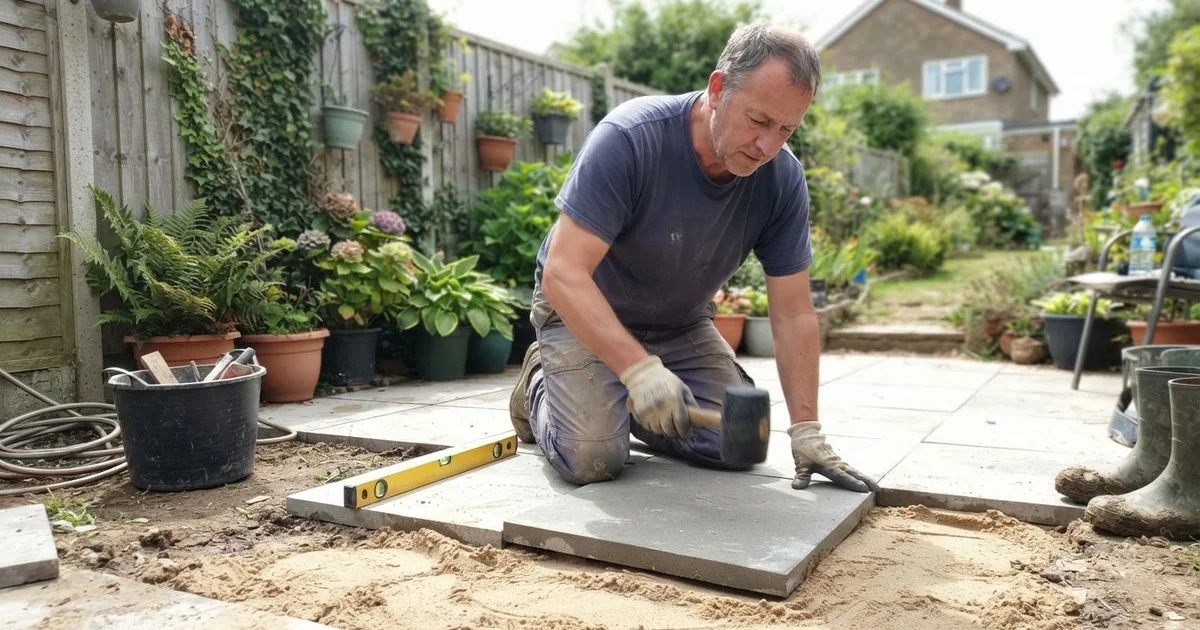
Laying a patio looks approachable in a way that a full driveway rebuild doesn’t. The area is usually smaller, the materials are easy to buy from a builders’ merchant, and there’s no shortage of guides showing the basic steps. Whether it’s actually a sensible DIY project depends heavily on the size, the ground, and how much you’re prepared to get wrong on a first attempt.
Where DIY genuinely works
A small, level patio, laid with concrete slabs or basic block paving over reasonably good existing ground, is within reach for someone comfortable with physical outdoor work and willing to take the groundwork seriously. The core steps, excavating to the right depth, laying and compacting a sub-base, bedding the slabs, and jointing them, aren’t complicated in principle. They just require patience, particularly around getting the base properly compacted rather than rushing to the visible part of the job.
If you’ve got a genuinely flat area, no drainage complications, and a modest size to cover, a weekend DIY patio is a realistic project for someone willing to hire the right equipment and follow the sequence properly rather than skip stages.
Where it gets harder than it looks
Anything involving a slope, a change in level near the house, drainage that needs directing away from a wall, or a larger area starts to move outside straightforward DIY territory. Getting falls right so water runs away from your house rather than toward it takes some understanding of levels and drainage that’s easy to get wrong without experience, and a mistake here can cause damp problems that cost far more to fix than the patio itself.
Natural stone like Indian sandstone or porcelain paving also raises the stakes. These materials are more expensive, less forgiving of uneven bedding, and harder to cut accurately, so a mistake is a costlier one than with a basic concrete slab.
What a professional actually adds
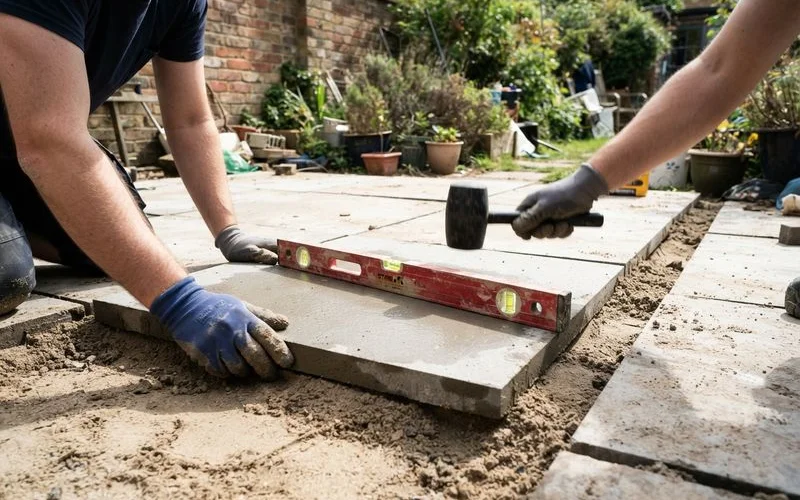
Beyond the physical labour, a professional brings judgement: knowing how deep to excavate for your specific ground, how to set falls correctly without guesswork, and how to handle a problem that shows up mid-job, like discovering the ground is wetter than expected or an old foundation is in the way. This is where the price difference is genuinely earned rather than just paying for convenience.
Professionally laid patios also tend to come with some form of workmanship guarantee, something a DIY job obviously doesn’t have if it goes wrong later. For larger or design-led projects, a contractor can also offer input on layout and material choice that’s hard to visualise on your own before work starts. Our guide to what happens during a driveway installation walks through that same stage-by-stage judgement call, useful background even when the job in hand is a patio rather than a drive.
Weighing it up
| Factor | DIY | Professional |
|---|---|---|
| Small, level, simple area | Realistic with the right tools and patience | Faster, but a bigger cost relative to the job size |
| Sloped ground or drainage needed | High risk of getting falls wrong | Handles level changes and drainage properly |
| Natural stone or premium materials | Costly mistakes if cutting or bedding go wrong | Skilled handling reduces waste and error |
| Time available | Needs a clear weekend or more, plus tool hire | Job typically finished in days |
| Aftercare if something goes wrong | None; you fix it yourself | Workmanship guarantee, in most cases |
Making the call
If your project is small, flat and forgiving, DIY is a genuine option and can save real money. If it involves any slope, drainage, or a premium material, the risk of an expensive mistake tends to outweigh the saving, and a professional’s experience with groundwork is exactly what prevents the kind of failure that shows up as pooling water or sinking slabs a year later.
Browse Cheltenham’s patio and garden paving specialists if you decide a professional is the better fit for your project, and see how we assess workmanship on our methodology page. You can also explore the wider directory from the Know Cheltenham home page.
FAQ
- Is laying a small patio a realistic DIY project?
- For a small, simple area, level ground and basic materials like concrete slabs, yes, it's achievable for a confident DIYer with the right tools and patience for the groundwork. Anything involving a slope, drainage design, or a larger area gets considerably harder to get right.
- What's the part of the job most DIYers get wrong?
- Sub-base depth and compaction. It's tempting to skip straight to laying slabs, but a patio without a properly compacted base will develop uneven slabs and pooling water within a season or two, regardless of how carefully the top layer was laid.
- Do I need any specific tools to lay a patio myself?
- A plate compactor for the sub-base, a spirit level, a rubber mallet, and something to cut slabs accurately if the layout isn't a simple grid. Most of this can be hired for a weekend rather than bought outright.
- Is it cheaper overall to DIY, once tool hire and mistakes are factored in?
- Often the saving is smaller than expected once tool hire, material wastage from a first attempt, and the time involved are added up, particularly for anything beyond a small, straightforward area.