Why driveways crack, sink or pool water, and how to prevent it
By Ethan Fischer · Updated 2026-07-20
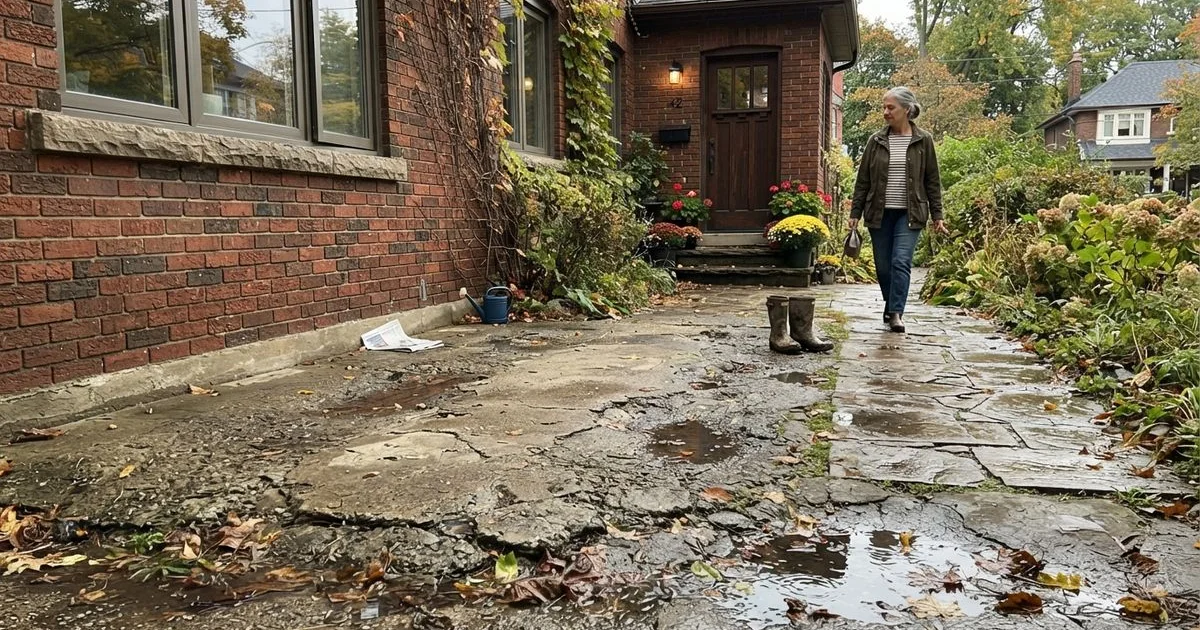
A driveway that starts sinking, cracking or holding puddles a year or two after it was laid is one of the more frustrating home improvement problems, mostly because the fault is invisible until it isn’t. By the time you can see the damage, the cause has usually been sitting under the surface since the day it was installed.
Cheltenham’s mix of clay-heavy garden soil and older drainage systems around the town’s Victorian and Regency-era streets makes this more relevant here than in areas with freer-draining ground. Clay holds water and swells and shrinks with the seasons, which puts extra demand on a driveway’s foundations that a thin or badly compacted sub-base simply isn’t built to handle.
The sub-base is doing almost all the work
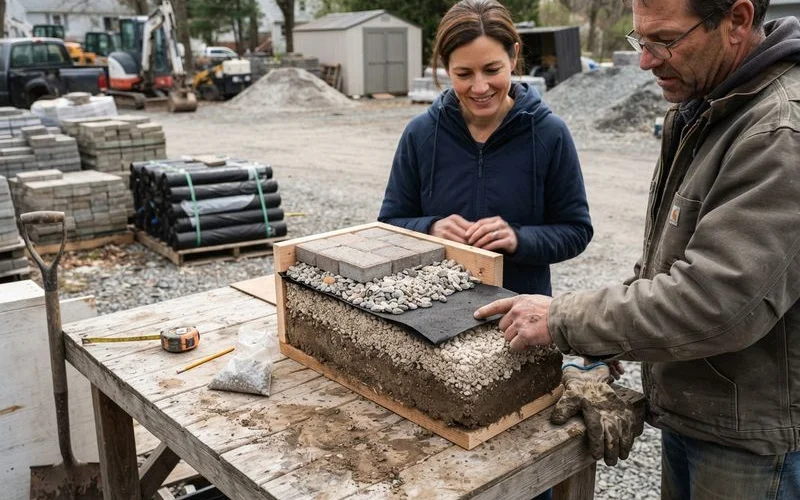
Whatever surface material sits on top, a driveway’s durability comes down to what’s underneath it: a layer of compacted hardcore, usually MOT Type 1 or similar, laid to the correct depth and compacted in stages rather than all at once. Skip this, use too thin a layer, or compact it in one pass instead of several, and the ground will settle unevenly under the weight of a car. That uneven settling is what shows up months later as a dip, a crack, or a section that no longer sits flush with the rest of the drive.
This is also why driveways that look identical on the surface can have completely different lifespans. A well-built base under block paving or tarmac should last 15 to 25 years with only minor upkeep. One that was rushed can start failing within two or three winters, regardless of how good the surface material itself is.
Drainage failures are the other common cause
Water that has nowhere to go is the second big driver of driveway problems. If a surface isn’t laid to a proper fall, or a soakaway wasn’t sized correctly for the area of hard surfacing added, water pools instead of running off. Standing water then works its way into any weak point in the surface or joints, softening the ground beneath and accelerating exactly the kind of sinking a solid base is meant to prevent.
Pooling water and drainage problems after installation are among the most frequently raised concerns in feedback on local paving work, often turning up months after a job was signed off as complete. It’s rarely obvious at handover, since a freshly laid surface can look flawless even when the fall hasn’t been set correctly.
What tends to go wrong, and where it shows up
| Warning sign | Likely underlying cause |
|---|---|
| A dip or soft spot underfoot | Sub-base laid too thin or not compacted in layers |
| Cracking that follows a straight line | Ground disturbed by a trench or previous excavation not recompacted properly |
| Water pooling in the same spot after rain | Incorrect fall, or a soakaway too small for the area |
| Block paving joints opening up and blocks rocking | Edge restraints not properly haunched, letting blocks creep outward |
| Whole sections sinking evenly | Sub-base compacted in one pass instead of several thinner layers |
What to do if you’re seeing these signs
Get a contractor out to inspect before the problem spreads to more of the driveway. A dip that’s caught early is often a smaller, localised fix; left for a season or two, water tends to keep softening the ground around it and the area needing attention grows. Ask directly whether the issue is a base problem or a drainage problem, since the two need different fixes and a contractor who can explain which one they’re looking at, and why, is worth more than one who just quotes a patch job on sight.
If you’re planning a new driveway rather than fixing an old one, the best protection is asking about sub-base depth and drainage design before work starts, not after. Our guide to what happens during a driveway installation walks through each stage so you know what a properly built base should look like while it’s happening, not just once it’s covered over. Our methodology weighs contractor feedback specifically around this kind of long-term outcome, not just how a job looked on the day it was finished.
For driveway-specific guidance and to compare local contractors, Cheltenham’s driveway paving specialists are listed with the workmanship signals that tend to predict whether a base holds up. You can also browse the wider directory from the Know Cheltenham home page.
FAQ
- Is it normal for a new driveway to develop hairline cracks?
- Very fine surface cracks in tarmac, especially near an edge, can appear over time without pointing to a structural fault. Cracks that widen, run in a line following where a trench was dug, or come with a dip underfoot are a different matter and worth getting inspected.
- How soon after installation should problems show up if the base was done badly?
- Often within the first one to two winters, since freeze-thaw cycles and saturated ground put the most stress on a weak sub-base. A driveway that develops sinking or pooling within two to three years of being laid almost always points back to preparation, not the surface material.
- Can a sinking patch be fixed without redoing the whole driveway?
- Sometimes, if the problem is localised and the rest of the base is sound. A contractor needs to inspect it to confirm the sinking hasn't spread. If it has, or the whole base was under-built, patching over it usually only delays a bigger job.
- Does the type of surface material affect how likely a driveway is to fail?
- Less than people expect. Block paving, tarmac and resin bound surfaces all fail for largely the same underlying reasons: an inadequate sub-base, poor compaction or drainage that wasn't designed for where the water actually needs to go.